Pokemon Legends ZA trade codes and what players actually need to know
Searches for pokemon legends za trade codes usually start with the same expectation: a string of characters you can paste somewhere to unlock a trade. Pokemon Legends: Z-A does not work that way. The game has no promotional code field, no redeem menu, and no secret in-game text box that turns a phrase into a guaranteed trade. What the game does have is a built-in local and online trading system called Link Play, and a separate Battle Club that lets up to four trainers battle and trade inside the same session. This guide explains how that system actually works in practice, what real limitations you will hit, and why a lot of the “trade code” content floating around the wider web describes a feature that simply does not exist in this title.
If you came here looking for a shortcut or a list of free in-game rewards, you will be disappointed. If you want to understand the real design of trading in Pokemon Legends: Z-A, what preparation makes a session smooth, and how to handle the quirks of real-time battles and the Z-A Royale while you trade, the rest of this page walks through the mechanics in detail. Everything below is written for a player who already owns a copy, has a Nintendo Switch or Switch 2, and is planning a real trading session rather than collecting screenshots of mythical code lists.
Why “pokemon legends za trade codes” is the wrong mental model
The phrase “trade codes” comes from older Pokemon experiences. In Pokemon Sword and Shield, you could generate a long numeric Link Code before joining a Y-Comm trade, and third-party tools surfaced the string as something players shared online. In earlier games, Secret Base codes, Global Trade System IDs, and Wonder Trade rumors created the same pattern: a piece of text that, in theory, led to a specific result. The phrase migrated forward into fan wikis and click-driven guides long after the underlying feature had been reworked.
Pokemon Legends: Z-A moves trading into a different design space. The game is built around real-time combat inside Lumiose City, a battle royale called the Z-A Royale, and a multiplayer mode called Battle Club. Trading is part of that multiplayer layer, but it is not gated behind a redeemable code. You join a session through a friend list, a session code shared in the Switch Online interface, or a Battle Club invite. There is no menu where typing the right phrase unlocks a special trade window. When you see a list of “pokemon legends za trade codes” on a content farm, the items on that list are usually invented, recycled from Sword and Shield, or copied from a template the site uses for every game.
This matters because players waste time hunting for codes that do not exist, and they also miss the features that do exist. A better use of the same effort is to learn how the real system handles friend requests, session codes, connectivity, and the in-game limitations on what you can and cannot trade.
How trading in Pokemon Legends: Z-A actually works
Trading in Pokemon Legends: Z-A runs through the Link Play layer that Nintendo built for the Switch generation. The exact flow is similar to other recent mainline entries: you open the menu, choose the Link Play or Battle Club option, pick Trade, and then either invite a friend or join an open session. The game’s battle-focused design does not change that core loop, but it does add a few twists worth understanding before you start.
Local wireless trading
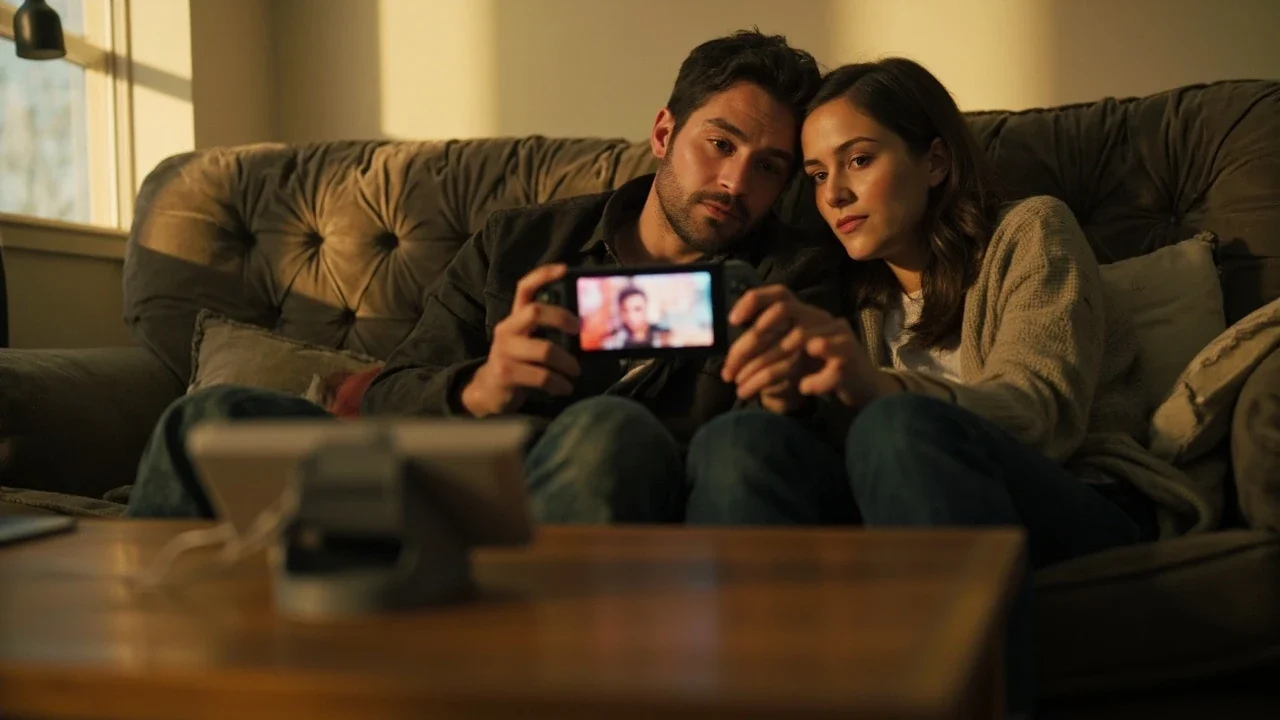
Two Switch consoles placed on the same network can trade directly without a Nintendo Switch Online subscription. This is the fastest path for friends sitting in the same room, and it is the most reliable way to verify that two saves are compatible before committing to a longer online session. Local wireless does not require a friend code exchange, but you still need to have a second user profile on the second console, and each profile needs to be linked to a different Nintendo Account. The system treats the two consoles as a temporary local group and offers the trade interface once both players select the same option.
Online trading through Link Play
Online trading requires a Nintendo Switch Online membership, which in 2025 still applies to the original Switch family and the newer Switch 2 hardware. Once a membership is active, you can open the Link Play menu, generate a session, and share a friend code or a session invitation. Friends on your Nintendo Switch account list can join, and you can trade as long as both trainers are in the same session. The game does not expose a global matchmaking trade lobby the way some older entries did, so trading online is friend-first rather than stranger-first. If you are looking for a stranger, you typically need to coordinate through a community Discord, a subreddit, or a friend who already knows the person you want to trade with.
Battle Club sessions and combined trade plus battle play
Battle Club is the game’s headline multiplayer feature. According to the official description, Battle Club supports up to four players in a single shared session. In practice, this means that a small group of friends can drop into the same multiplayer room, run battles together, and trade with each other without leaving the session. For many players, this is the most natural setting for trading because everyone involved is already engaged with the same content. You are not joining a stranger’s lobby to make a single trade and then bouncing; you are part of a small, persistent group for the length of the session.
This is also where a lot of the “code” confusion begins. Inside Battle Club, the host has a session code that friends can type into their Switch Online invite panel. The code looks like the kind of string a searcher might call a trade code, but it is really a session code that opens the door to the whole room, including battles, trades, and exploration. Treating the string as a magical trade unlock will mislead you. Treat it as a room key instead.
The real list of what a “code” can do in this game
If you strip away the myth and the clickbait, every code-shaped string you can enter or share in Pokemon Legends: Z-A falls into one of a small set of categories. Knowing these categories keeps you from wasting time on the wrong path.
- Friend codes: twelve-digit identifiers tied to a Nintendo Account. You add a friend with the code, then they can join your Link Play or Battle Club sessions. The code does not unlock content and it is not specific to this game.
- Session codes: shorter codes that a host generates from the Switch Online invite screen. Other players enter the code on the same screen to join the room. The code expires when the session ends.
- Battle Club invites: invitations sent through the Switch Online friends list. The invite appears as a notification and opens the multiplayer interface when accepted.
- Profile codes and trainer names: identifiers you might share in a community to help a stranger find you before the trade. They are not entered in-game.
None of these are “pokemon legends za trade codes” in the redeemable sense. They are infrastructure, not rewards. Any site that presents a list of typed strings promising specific Pokemon, items, or currencies is describing a feature that does not exist in this title.
What you can and cannot trade in Pokemon Legends: Z-A
Trading in the mainline Pokemon series has always come with restrictions, and Pokemon Legends: Z-A is no different. The real-time battle and Mega Evolution design also introduces a few new constraints that are worth understanding before you offer a Pokemon you care about.
Standard trade rules that still apply
The game follows the same broad trade rules that have been standard in the series for years. You cannot trade mythical Pokemon, you cannot trade Eggs, and you cannot trade Pokemon that are currently holding a specific class of event-only item until that item is removed. Once a Pokemon is traded, it receives a small mark or icon in its summary screen to indicate the change in original trainer, which is relevant for any completion or collector goal that depends on original trainer identity.
Some of the restrictions are version or generation specific. Pokemon caught or received in earlier save files from older games can sometimes be moved forward through Pokemon HOME, but HOME compatibility is a separate process from Link Play. If your plan is to bring a Pokemon from a save on a different Switch into Pokemon Legends: Z-A, you should confirm that the current HOME update supports the title before assuming it will work.
Restrictions tied to the real-time battle system
Because Pokemon Legends: Z-A is built around positioning, timing, and the Z-A Royale’s Battle Zones, certain Pokemon that are well suited to turn-based play may not be a good trade target for a friend who is focused on the game’s signature mode. The trade itself works the same way, but the recipient may find a Pokemon less useful than it would have been in a traditional entry. This is not a hard restriction from the trade menu; it is a practical one based on what the recipient plans to do with the Pokemon after the trade.
Mega Evolution also deserves a mention here. The game lets trainers collect Mega Energy during battles and temporarily Mega Evolve their current Pokemon. A traded Pokemon is still eligible for Mega Evolution in battle as long as the species is supported, but the energy mechanic is not something you can transfer between trainers through a trade. Each trainer builds up Mega Energy on their own save through play.
Preparing for a clean trade session
Most failed trades are not the result of broken code. They come from missing preparation. Before you and your trading partner sit down, a short checklist removes almost every common error.
- Confirm subscription status: if you are trading online, both players need an active Nintendo Switch Online membership.
- Confirm firmware and game version: a session between two consoles running different patch versions can fail to connect or disconnect mid-trade.
- Open the right menu in advance: both trainers should be standing in a safe location, ideally outside of an active Battle Zone, before anyone opens the Link Play menu. Being mid-battle is one of the most common reasons a trade prompt fails to appear.
- Decide direction before you join: agree on what each side is offering and what they want in return. In a four-person Battle Club session, naming offers clearly saves time.
- Have a fallback: if the session drops, plan to retry on local wireless before assuming anything is broken.
A session that is prepared this way usually completes in under five minutes. A session that is not prepared can take an hour of restarts before anything is actually traded.
Where the “trade code” myth comes from, and how to spot it
Given how often this topic is searched, it is worth understanding where the misconception starts. A few patterns repeat across the search results that surface for pokemon legends za trade codes, and recognizing them saves you time.
| Claim pattern | What it usually means | What to do instead |
|---|---|---|
| A list of short strings labeled as “working codes” with rewards like rare Pokemon or currencies | Template content reused from older games, or fabricated lists meant to capture search traffic | Check the date of the article and look for evidence that the list was verified in-game on a current save |
| Instructions to “enter the code in the Mystery Gift menu” | Reference to a feature that exists in other mainline entries but not in this one | Open the actual menu in your copy of the game. If there is no field labeled for code entry, the instructions are wrong |
| Friend code lists presented as “trade codes” | Friend codes of public figures, streamers, or community volunteers, not a redeemable string | Add the friend in the Switch friends list, then invite them to a session through the normal multiplayer flow |
| Claims of online tools that generate “Pokemon Legends Z-A” trade codes | External tools, usually front pages, that pretend to generate the strings the user wants to see | Treat any tool that asks for personal information or payment as unsafe; the strings it generates do nothing in-game |
The single best test is the game itself. If you cannot find the input field described in an article inside the actual menus of your own copy, the article is wrong about the feature. Pokemon Legends: Z-A, as described on the official Pokémon Legends: Z-A page, supports a real-time battle system, a Z-A Royale, and a Battle Club for up to four players, and does not document any kind of text code redemption for trades or rewards.
How real-time battles shape trading decisions
Because the battle system in Pokemon Legends: Z-A is real-time and positioning-based, the value of a traded Pokemon depends on more than its species and moves. A few practical factors should sit alongside any trade negotiation.
Move timing and command windows
Moves in this game operate on a timing-based system rather than the traditional turn order. A Pokemon that needs a long wind-up to land a powerful attack may struggle in the Z-A Royale’s Battle Zones, where opposing trainers can launch pre-emptive strikes. When you trade, it helps to know whether the recipient is using the Pokemon for story content, Battle Club play, or Z-A Royale. The same species can be a fair or unfair trade depending on the use case.
Stun, positioning, and role
Opposing trainers in Battle Zones can stun your Pokemon for a few seconds. Pokemon that rely on staying mobile or on setting up sustained damage will feel this more than tanky or ranged options. Trading a Pokemon that the recipient expects to use in a stun-heavy environment without flagging the issue can sour an otherwise fair swap.
Defensive utility versus Mega Energy
Mega Energy is generated through play, not transferred through trade. A Pokemon that leans heavily on Mega Evolution as its main value will be weaker for a recipient who has not yet built up the energy bank. Trades that ignore this dynamic leave one side of the deal doing more setup work than the other.
A practical trading scenario in a Battle Club session
To make the mechanics concrete, imagine a four-player Battle Club session: Alice, Ben, Cara, and Dan. They want to trade a small set of Pokemon for variety and to fill gaps in each other’s teams.
- Alice hosts the session and shares the session code in the group chat.
- Ben, Cara, and Dan each open the Switch Online invite screen, type the code, and join. Everyone ends up in the same multiplayer room.
- Alice opens the trade menu first, selects a Pokemon, and confirms the offer. Ben receives the prompt on his console, selects his offered Pokemon, and confirms the trade. The other two players wait for their turn.
- Cara and Dan repeat the same two-player sequence, taking turns so that no one has to manage two simultaneous trade prompts.
- After all trades complete, the group runs a few Battle Club matches using the Pokemon they just received, to confirm the trades were fair before the session ends.
This flow uses no codes other than the session code at the start. It runs entirely through the standard Link Play and Battle Club tools, and it does not depend on any third-party website. Any guide that promises a faster path with a shorter string is offering a feature that this game does not provide.
Common problems and how to diagnose them
Even with good preparation, a trade session can stall. The table below maps the most common symptoms to a likely cause and a sensible first check.
| Symptom | Likely cause | First check |
|---|---|---|
| Cannot see friend’s session in the invite list | Friend list has not refreshed, or the friend is not on the same game version | Force a friend list refresh from the Switch home menu, then confirm the game version on both consoles |
| Session code rejected as “not found” | Code was typed incorrectly, or the host has already closed the session | Confirm the code with the host and re-enter it; ask the host to leave the session open while guests join |
| Trade prompt never appears for one player | One side is inside a Battle Zone or mid-battle, or the offered Pokemon is restricted | Move both players to a safe outdoor location and re-open the trade menu; confirm the Pokemon is not a mythical or Egg |
| Connection drops during the trade | Unstable network, or the host has closed the session early | Retry on local wireless to confirm the saves are compatible, then rejoin online once the network is stable |
| Traded Pokemon arrives but lacks a specific move | The recipient’s game treats certain moves as version-exclusive, or the move is above the level threshold | Check the Pokemon’s summary screen after the trade; teach the missing move with the in-game relearn system if available |
Most of these problems are environmental rather than design flaws. The trade system in Pokemon Legends: Z-A is reliable when both sides follow the same steps; the errors usually come from skipping one of them.
Coordinating with strangers safely
Many readers searching for pokemon legends za trade codes are actually trying to find a stranger to trade with. The game’s friend-first design does not make that easy, but it is possible with a few sensible habits.
- Use a community hub: subreddit trade threads, Discord servers with verified channels, and the like are the most common meeting point. Read the rules of the community before posting, and use the thread format the moderators recommend.
- Trade small first: offer a low-value trade at the start of a new relationship to confirm the other side follows through, before committing a rare Pokemon.
- Keep records: save a screenshot of the trade prompt, the trade complete screen, and the in-game summary of the Pokemon you received. The record helps if a dispute comes up later in the community.
- Do not share personal information: friend codes and in-game trainer names are enough to set up a trade. There is no need to share a phone number, an email, or any other contact detail.
- Leave the session promptly after the trade: lingering in a stranger’s Battle Club session increases the chance of being added to a friends list you do not want.
These habits do not unlock new code-shaped features, but they do make the trading experience smoother, and they keep you out of the kinds of situations where a stranger asks for a code “to verify your account” or anything similar.
Why understanding the design helps you trade smarter
Trading in Pokemon Legends: Z-A is a small but meaningful part of a much larger real-time game. Knowing the design of the surrounding system changes how you think about what to offer and what to ask for in return. A few high-level observations tend to come up again and again in good trades.
- Battle Club sessions are the natural trading venue: trades between friends happen in the same place where you are already playing together, which makes it easier to verify a Pokemon’s behavior before and after the trade.
- Story, Battle Club, and Z-A Royale have different value curves: a Pokemon that is excellent in the story may be less impressive in the Z-A Royale, and vice versa. Trades that respect this difference tend to feel fair to both sides.
- Mega Energy stays on the save, not on the Pokemon: the recipient is responsible for building their own Mega Energy bank, so do not price Mega Energy into a trade.
- Original trainer status is permanent: once a Pokemon is traded, its original trainer changes, which can matter for collector and completion goals that you may not be aware of at the time of the trade.
These observations are the kind of detail that a useful trading guide carries. They are also the kind of detail that a code list never can, because the lists are written to capture search traffic rather than to teach the game.
What to do instead of hunting for codes
Players who came to this page looking for pokemon legends za trade codes and have now read through the design of the real system usually have a clear next step. The simplest and most reliable plan is to set up a real trade with the people you already play with.
- Add the friend you want to trade with to your Switch friends list using their friend code. Make sure both of you are running the same game version.
- Decide what each side is offering in plain text, outside the game, so the trade is not a surprise.
- Host a Battle Club session on one console and share the session code through the Switch Online invite menu. The session can hold up to four players, so a small group can run a series of trades in one sitting.
- Run the trades in pairs so the host and one guest trade at a time, while the rest of the group waits for their turn. This avoids the situation where two trade prompts compete for attention.
- Verify each trade by opening the summary screen of the Pokemon you just received, confirming species, moves, and any mark or icon the game adds for a traded Pokemon.
- Stay for a few matches in the Battle Club after the trades to confirm the Pokemon behaves the way you expected in real-time combat.
This plan takes longer to set up than pasting a string, but it produces a real result. The session code, the friend code, and the trade itself are the only strings involved, and each of them is documented in the actual game.
What real sources confirm about the game
Two details from the public, verified record are worth carrying into any trade planning. The first is the structure of the multiplayer mode. According to the published description of the title, the game includes a multiplayer mode called Battle Club, where up to four players can join the same session, run real-time battles, and trade. The second is the real-time battle system itself, which uses positioning, timing, and a stun mechanic to replace the turn-based combat of earlier entries. Both of these details affect trading decisions even though they are not trade features in the strict sense.
External coverage of the game also describes the Z-A Royale and its Battle Zones, the Mega Energy mechanic, and the limited edition release timing on the original Switch and the Switch 2. None of this coverage describes a text code that unlocks trades, which is consistent with the menu structure of the game itself. A reader who wants a deeper read on the game’s design can find more detail on the official entry at the Pokémon Legends: Z-A Wikipedia page, which provides useful background for this point.
Frequently asked questions
Are there real pokemon legends za trade codes I can redeem in-game?
No. Pokemon Legends: Z-A does not have a code redemption system for trades. Any site claiming to list “pokemon legends za trade codes” is either describing a feature from a different game or fabricating a list to capture search traffic. The only codes that exist in the game are friend codes for adding trainers to your Switch friends list and session codes for joining a host’s multiplayer room. Neither one is entered into a trade-specific field inside the game.
How do I trade with a friend in Pokemon Legends: Z-A?
Add your friend to your Switch friends list using their friend code, make sure both of you are running the same game version, and then have one of you host a Link Play or Battle Club session. Inside the session, open the trade menu, pick the Pokemon you want to offer, and let the other player confirm the offer on their side. The trade completes inside the session without any other input.
Can I trade with strangers without adding them as a friend?
Not directly. The game does not have a global trade lobby the way some older entries did. To trade with a stranger you need to coordinate through a community hub, exchange friend codes, add each other on the Switch, and then run a private session. The session code itself is short-lived, so a stranger can join your room without becoming a permanent friend on your friends list.
What restrictions apply to trades in Pokemon Legends: Z-A?
The standard series restrictions still apply. Mythical Pokemon cannot be traded, Eggs cannot be traded, and certain event-only held items must be removed before the trade will go through. A traded Pokemon receives a mark or icon in its summary screen to indicate the change in original trainer. Mega Energy does not transfer with the Pokemon, because Mega Energy is stored on the save rather than on the individual creature.
Does trading work between the original Switch and the Switch 2?
Yes, in the sense that the game supports both consoles. As long as both consoles are running compatible versions of the game, a trade session can be set up between them. If you are running into a connection problem, the first thing to check is the version number in the bottom corner of the title screen, since a mismatch there is the most common reason two consoles cannot find each other.
Can I move a Pokemon from an older game into Pokemon Legends: Z-A through trading?
Not through Link Play. Moving a Pokemon between save files on different consoles or different games is the job of Pokemon HOME, which is a separate service with its own subscription rules. Check the current compatibility list for HOME before assuming a specific older title can be moved forward into this game, because the supported list changes with each HOME update.
Is it safer to trade on local wireless than online?
For most pairs of friends, yes. Local wireless does not require a Nintendo Switch Online membership, it does not depend on internet stability, and it is the fastest way to verify that two saves are compatible. Online trading is more convenient across distance, but a local session is a useful fallback if the online session is unstable.
How long does a trade usually take in Pokemon Legends: Z-A?
A prepared online or local session usually completes in under five minutes once both players are in the same room. The time cost tends to come from coordination before the session, not from the session itself. Players who agree on what each side is offering in advance consistently finish faster than players who decide on the spot.
Why do so many sites list pokemon legends za trade codes if they do not exist?
Because the search term is popular, and a fabricated list captures more traffic than a careful explanation. Most of the lists are templates that get reused across games, with the game name swapped in and a handful of generic items added as “rewards.” The result is content that looks like it answers the question but does not reflect the actual menus or features of the title.
What should I do if a stranger asks me for a “trade code” to verify my account?
Refuse. There is no verification code in Pokemon Legends: Z-A, and no legitimate trade partner needs one. Stick to the in-game trade flow through a Battle Club session and ignore any request for personal information, payment, or a code that you would type into a website. The real trade system is simple enough that the request itself is a signal that something is wrong.