
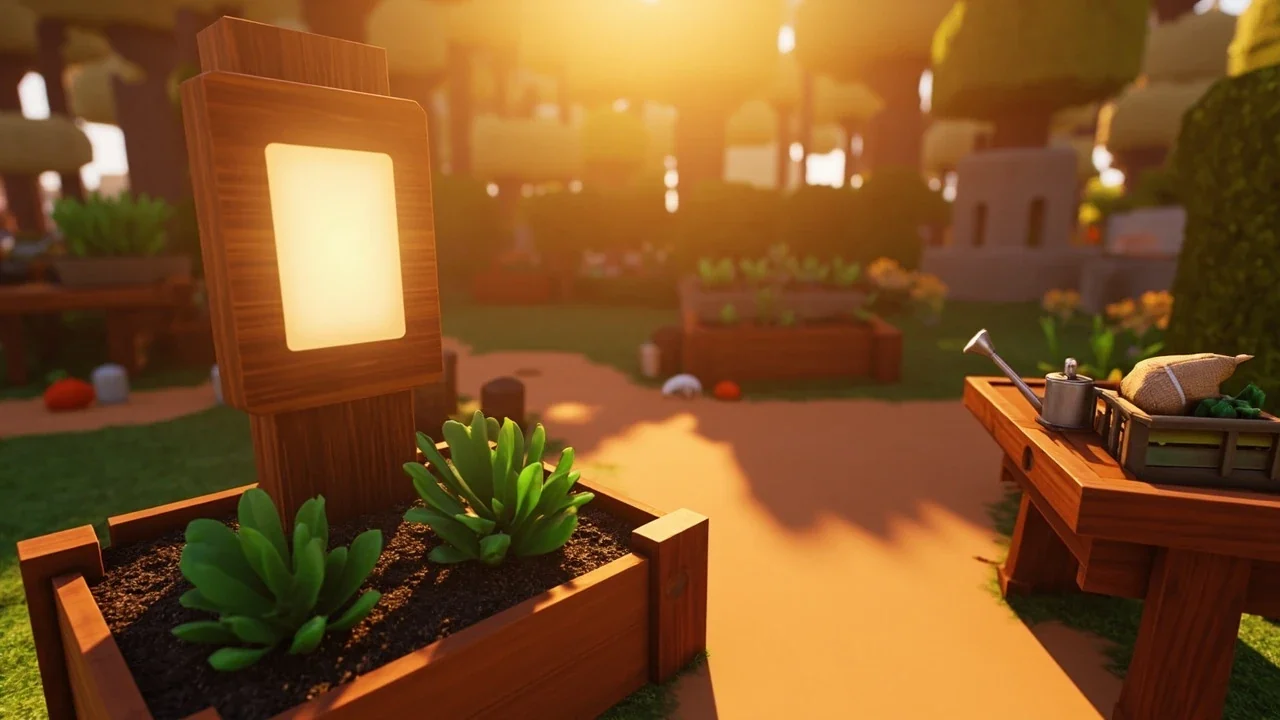
Garden Horizons codes and what they actually unlock in the game
Redeemable codes are one of the cheapest retention tools a Roblox developer can ship, and Garden Horizons leans on them the same way other farming-idle experiences on the platform do. Players who search for Garden Horizons codes usually want the same three things: a place where the latest list is kept current, a working redemption path, and a clear sense of which rewards are worth the login. This guide is written for English-speaking players who already know how to launch a Roblox experience and want a precise, no-fluff reference for Garden Horizons codes specifically, including the technical reasons a code stops working and the design decisions that shape how often new codes are released.
One note before the rest of the article: the verified public reference for the broader genre and platform context is the Grow a Garden Wikipedia entry, which describes the farming-idle pattern that Garden Horizons fits into. Anything about Garden Horizons itself that is not confirmed in an official channel is treated as a careful read of the genre, not as a guarantee, and the reward tables below are framed that way on purpose.
What Garden Horizons codes actually give you
Codes in this category of Roblox game almost always deliver soft-currency or consumable boosts rather than permanent gear, because permanent rewards would short-circuit the progression loop the developer is trying to balance. Garden Horizons follows that same logic. The rewards tend to fall into a small number of buckets, and recognizing those buckets helps you decide whether it is worth logging in for a fresh code or waiting for a weekend drop. The bucket a developer leans on also tells you something about the studio’s current priorities: a heavy soft-currency push usually means retention is sliding, while a heavy cosmetic push usually means the team is investing in long-term identity for the title.
| Reward type | Typical example | How it changes your session | Why developers ship it |
|---|---|---|---|
| In-game soft currency | Coins, gems, or a currency called Sheckles in similar titles | Speeds up the next harvest cycle or unlocks a mid-tier seed | Reduces the early grind where players would otherwise drop off |
| Booster or consumable | XP boost, growth speed, luck multiplier | Compresses several minutes of waiting into one focused session | Drives a quick return visit so the player notices the next code drop |
| Cosmetic item | Limited hat, plot decoration, or a unique pet | Adds visible identity to the player avatar or garden | Creates social proof when other players see the item in a server |
| Random crate or seed | Lootbox-style container, rare seed pack | Adds variability so each redemption feels distinct | Increases the share-rate on social media because outcomes are screenshot-worthy |
| Event token | Limited currency redeemable only during a seasonal shop rotation | Pushes the player into a time-gated sub-economy | Spreads activity across the full length of an event window |
None of those buckets are confirmed for a specific live string in Garden Horizons without an official source, so treat reward names as a reading of the genre rather than a guarantee. The practical point is that you should never assume a code will hand you the rarest item in the game. If a code page promises a mythic pet, treat that claim with the same skepticism you would apply to a forum post. A second-order effect worth noting is that the reward shape itself is a tell: studios that lean on cosmetics are usually trying to build a long-term identity around the title, while studios that lean on soft currency are usually trying to lift a struggling retention curve. Studios that introduce event tokens, on the other hand, are usually trying to control the pacing of a seasonal update and keep concurrent users elevated for the full event window rather than spiking on day one.
There is also a quiet tax to be aware of when codes hand out boosters. A 30-minute XP boost looks generous on the redemption toast, but if the player has not planned their session around it, the timer burns down while they are stuck in a server queue or stuck waiting for a slow-loading plot. The studios that think about this hand out boosters with a short grace period and a visible countdown in the HUD, and the studios that do not think about it tend to ship the same string every event and watch the redemption count drop. Recognizing that pattern is part of why experienced players learn to time their logins around the booster they actually want rather than racing to redeem the first code they see.
Where developers usually post Garden Horizons codes
Before you trust any list, it is worth understanding the code supply chain. A Roblox title at this scale rarely runs a dedicated engineering team for code distribution, so the pipeline is usually a thin wrapper around a JSON file or a Roblox MessageService event. That thinness is why expired codes stay expired, why old lists circulate for months, and why the same string sometimes works on one account and not another. It also explains why a code that worked an hour ago can return a generic error toast after a quiet server restart, and why a code posted on a developer’s Discord can take several minutes to become active in the live experience even when both surfaces are run by the same person.
Reliable sources for Garden Horizons codes, in rough order of trustworthiness, are:
- The developer’s official Discord server, where a designated channel or bot is the system of record for new strings and where moderators usually pin the most recent drop.
- The official Roblox game description and the developer group’s announcements feed, which is where patch-note style releases tend to live and where screenshots of new rewards usually appear first.
- The official X or Twitter account linked from the game page, which is often the fastest source during a launch window and the place a code will surface if the Discord bot is offline.
- Community wikis and dedicated fan sites, which are useful but lag behind by hours or days and frequently copy older lists without flagging the age.
- Aggregator videos and tier lists on YouTube, which are convenient but the most likely to carry dead codes, and which often splice in strings from entirely different titles to fill out a thumbnail.
If you are weighing a list on an aggregator, scroll to the bottom and look for a timestamp. A page that has not been touched in weeks is the single most common reason a player thinks every Garden Horizons code is broken. A second check is to compare the alleged code against the developer’s most recent Discord post. If the string does not appear in the official channel, it is almost certainly recycled from an older list. A third, weaker signal is the game’s social feed: studios that are actively promoting an event almost always pair a new code with a graphic, and the absence of that graphic is a quiet hint that the string is no longer live. A fourth, very practical check is to look at the comments under the official post. Players in the comments are usually the first to flag a typo, a regional lock, or a one-per-account error, and a comment thread with that kind of feedback is a much better signal than a generic “all codes working” banner on a third-party site.
How to redeem Garden Horizons codes step by step
The redemption path for almost every Roblox garden game follows the same shell: launch the experience, look for a dedicated button, paste a string, and read the confirmation toast. The exact wording and icon change from game to game, but the underlying state machine is nearly identical, which is why a careful walkthrough of the steps is more useful than a screenshot of a specific menu. The steps below assume Garden Horizons keeps the conventional layout, and they note the points where the game is most likely to deviate from the genre baseline. The same flow also tends to hold across platforms, with the only meaningful difference being the on-screen keyboard behavior on phones and tablets, which is covered at the end of the section.
- Open Roblox and search for Garden Horizons in the discovery surface. Confirm the developer name shown in the listing matches the studio you expect, since copycat games are common in this niche and a similarly named title with a different developer is not the same experience.
- Press the green play button to join an available server. Wait for your avatar to spawn into the garden hub rather than a generic Roblox lobby, because the redemption UI is usually anchored to a world object that only loads once the hub is ready.
- Locate the Codes button. It is typically placed in the top-right HUD, attached to a small gift box or a settings cog, or sitting above a wooden signpost. If the icon is missing, walk to the central spawn area because the redemption NPC is usually a few steps away from the starting pad.
- Tap the button to open the input field. Type or paste the code exactly as it appears, paying close attention to capitalization, since Roblox code strings are case-sensitive in most titles and a single lowercased character is enough to trigger a silent reject.
- Press the Redeem or Confirm button. A success toast should appear within a second or two. If nothing happens, the input field may have stripped a trailing space, which is a common silent failure, and retyping the string from a plain text source is the cheapest fix.
- Check your in-game mailbox or inventory to confirm the reward arrived. Some games queue the delivery and apply it on the next server tick, so a short wait is normal and an empty inventory at the half-second mark is not by itself a sign that the code failed.
If the redemption button is not on the HUD at all, the developer has usually tied codes to a specific live event. The codes channel on the developer’s Discord is the fastest way to confirm whether a missing button is a bug, a regional lock, or simply an indicator that no active string exists right now. A useful habit is to leave the input panel open while you alt-tab to Discord, because that lets you copy and paste a fresh string without reloading the world. If you do reload, expect a short queue during a code drop, and do not interpret a slow join as a sign that the game is down. On mobile and tablet, the on-screen keyboard can also insert a hidden smart quote when you paste from a screenshot, so switching to a hardware keyboard or a plain text field before copying is a worthwhile step on those clients.
A second habit worth building is to redeem one code at a time and watch the toast. Redeeming a long list in a single sitting makes it very hard to tell which string failed when a batch contains one expired entry, and the only signal the client gives is a generic error message. Redeeming slowly also lets you see the reward animation, which is a useful sanity check for crates and seed packs that need a second action to open. Players who skip the animation often report a “broken” code when the reward is actually sitting unopened in their inventory, and that confusion is one of the more common sources of misleading bug reports on community wikis.
Why a Garden Horizons code might not work
Failed redemptions fall into a small number of predictable buckets. Walking through them in order saves a lot of pointless frustration, because the most common cause is also the easiest to fix. The table below maps the symptom you see in the client to the most likely server-side cause, the cheapest fix to try first, and what the symptom tells you about the code itself. The same table is also useful for moderators, since a player who can describe their symptom clearly is much easier to help than one who just says the code is broken.
| Symptom | Likely cause | What to try first | What it tells you about the code |
|---|---|---|---|
| Nothing happens when you press Redeem | Trailing space, autocorrect, or pasted smart quotes | Retype the string manually in a plain text field, then copy it back | The code itself is probably still valid |
| A red error toast appears immediately | Expired or region-locked string | Cross-check with the official Discord timestamp | The developer has rotated this code out |
| The button is greyed out or missing | Codes feature is disabled during maintenance or a limited event | Rejoin the server and check for an announcement banner | The pipeline is paused, not broken |
| Code works for a friend but not for you | Per-account or per-region flag inside the data store | Check whether the code is marked as a one-time use | Some codes are intentionally one-per-account |
| Reward arrives but is empty | Reward container requires a second action, like opening a crate | Look in your inventory for a new unopened item | The redemption itself worked |
| Success toast appears twice in a row | Client retried after a slow server response | Wait a minute and recheck the inventory before redeeming again | Double-redemption is usually prevented server-side |
| Mobile keyboard eats the first character | Autocapitalize on the Roblox mobile client | Disable autocorrect or paste from a hardware keyboard | String is valid; the client is the problem |
Each of those symptoms is also a useful diagnostic for the developer side of the pipeline. A red toast usually means the string was removed from the active set on the server, while a missing button means the entire feature flag was toggled off. Players who understand the difference stop blaming the network and start checking the source. Two additional edge cases are worth flagging: a code that returns a success toast but never delivers a reward is usually a sign that the reward table on the server is out of sync with the client, and a code that crashes the input panel on mobile is almost always an on-screen keyboard bug rather than a string problem. Both of those edge cases are rare, but both tend to generate a lot of noise on community wikis, so it is worth recognizing them when they show up.
A separate category worth mentioning is the regional lock. Some studios gate codes by country for tax or store-policy reasons, and the client will often surface that as a generic “invalid code” toast even when the string is otherwise active. The only reliable way to test for a regional lock is to ask a friend in another country to try the same code and compare the result. If the friend redeems successfully and you do not, the regional lock is the most likely explanation and no amount of retyping will fix it. Studios that take regional locks seriously will usually publish a list of supported regions in their Discord, and a quick check of that list will save a lot of trial and error.
The design and engineering logic behind Garden Horizons codes
Because Garden Horizons is built on the same Roblox engine stack as other popular social experiences, its code pipeline follows patterns that are worth understanding before you start typing strings into the redemption box. A few of those patterns, including the way limited windows align with in-game events and weekly shop rotations, are borrowed from the broader farming-idle family. The Roblox experience that arguably defined that pattern at platform scale is summarized in the Grow a Garden entry, which describes how weekly exclusive drops and a shared multiplayer plot became a baseline that smaller garden titles build on. Garden Horizons sits inside that lineage, so its code cadence and reward shapes will feel familiar to anyone who has redeemed a similar set of codes before.
From a production standpoint, a code system is a cheap retention lever, but only if the team respects the constraints of Roblox’s data layer. The most common pattern is a small key-value store on the server, a MessageService broadcast that announces new codes, and a redemption endpoint that checks the requesting player’s UserId against a one-time-use table. Knowing that shape helps you predict when codes will appear and when they will not. It also tells you why a “secret” code can go live and never be announced: a developer can flip a single value in the data store and let the string work for the players who find it, which is a useful tactic for creator-coded events and creator rewards. The same architecture also explains why the studio is usually slower than the community at confirming a working string: the data store is the source of truth, and a Discord moderator can only confirm what the live server reports, not what the announcement claimed.
Developers tend to push new codes around three events:
- Update launches, where a fresh patch warrants a thank-you drop to the active player base and where the studio usually pairs a soft-currency code with a small cosmetic to make the patch feel celebratory.
- Milestone celebrations, such as likes or favorites thresholds reached on the game page, where the code is partly a marketing event and partly a way to convert a passing visitor into a redeem-and-stay player.
- Weekend or holiday windows, when concurrent users spike and the studio wants to convert that traffic into a longer session through a booster that expires before the next school night.
The cadence is rarely random. A studio that follows a disciplined release schedule will post a code within an hour of a major patch and a second code in the final hours of a weekend event. Studios that post sporadically are usually one or two developers handling the entire pipeline, and the cadence reflects their availability rather than a designed schedule. A reasonable heuristic for players is to check Discord and the social feed on patch days, on the first day of a weekend, and on any date the developer has flagged in advance on the game page. Players who also keep a small personal log of recent drops quickly notice when the cadence shifts, and that shift is often the earliest public sign that a larger update is in flight.
On the engineering side, the most common production bugs are silent. A code string that includes a Unicode look-alike character can be hard to spot in a screenshot and impossible to redeem for a player who copied it from a thumbnail. A redemption endpoint that does not normalize whitespace will reject perfectly valid strings. And a feature flag that was meant to be temporary will sometimes stay off for an entire update cycle, which is why the button is missing in the HUD but codes still appear on Discord. None of these failures are exotic, but they are the reason a careful, technical reading of the symptoms saves time. The same pattern is described in a broader context on the Grow a Garden Wikipedia page, which goes into how Roblox farming-idle titles handle weekly rotations and retention drops at platform scale, and which is a useful reference for any player who wants to understand why a small studio’s code pipeline looks the way it does.
There is also a useful pattern around testing that is worth flagging. Studios that run a public test server often seed test codes into that environment first, and a string that works on the test server but not on live is almost always a sign that the code is staged for a future drop. Players who have access to a closed beta or a friends-and-family test build will sometimes spot those strings days before they go live, and the most disciplined studios pre-commit to publishing those test strings on Discord as soon as the live patch lands. The less disciplined studios leave test strings in screenshots and end up with a wave of failed redemptions on day one, which is one of the more reliable signals that a launch has been rushed.
How to keep your Garden Horizons code list fresh
Most players end up with the same handful of bookmarked pages and then forget to revisit them. A few small habits will keep you from missing a useful drop and from wasting time on stale lists. The five habits below are deliberately cheap, because a list-maintenance routine only works if it survives the moment a new patch drops and your Discord explodes with notifications. Each habit addresses a specific failure mode, and removing one failure mode at a time is a more reliable path than rebuilding your workflow after a missed code.
- Pin the developer’s Discord and turn on notifications for the codes channel so you see new strings the moment they go live, and mute the rest of the server so the channel does not get buried in chatter.
- Follow the studio’s social account and turn on post notifications, since announcements often lead the Discord post by a few minutes and the social post is also where a code screenshot is most likely to surface cleanly.
- Bookmark the Roblox game page itself, because the description is occasionally edited to include a current code and the page also surfaces any active event banner that would otherwise stay hidden.
- When you find a list you trust, sort it by last-updated date rather than by the order the strings appear, and ignore any list that does not show a timestamp or that hides the timestamp under a “last updated” button instead of putting it in the open.
- Do not redeem in bulk from a screenshot. Open the official source and copy the string from a selectable text field so the characters survive the round trip without smart-quote substitution or autocorrect.
Those five habits take less than a minute to set up and will keep you from joining the long queue of players who spend an evening debugging a list that was outdated before they opened it. A sixth, optional habit is to keep a tiny personal log of which codes you have redeemed and when. A spreadsheet with three columns (date, code, reward) is enough to spot a pattern, especially if the developer is silent about which codes have been retired. It is also useful evidence if you ever want to report a duplicated or non-functional code to the studio, because the timestamp plus the reward you actually received is more credible than a generic “it didn’t work” message. Over time, that log also becomes a private record of how generous a particular developer is with soft-currency drops, which is one of the more underrated signals when you are deciding whether to invest in a title long-term.
One more habit worth adopting is to unsubscribe from aggregators that get it wrong repeatedly. An aggregator that publishes expired codes is worse than no aggregator at all, because it trains you to doubt strings that are actually live. The simplest way to filter aggregators is to keep a short list of sites that publish a visible timestamp, and to delete bookmarks for any site that fails that check twice in a row. After a few weeks, the list of trusted sources is small enough to check in under a minute, and that small list is the single biggest improvement you can make to your code-hunting workflow.
What to do when there are no active Garden Horizons codes
Every farming-idle game on Roblox has quiet stretches, and Garden Horizons is no exception. If the official sources show no live string, the most useful thing you can do is treat the gap as a free trial of the game’s normal progression loop. That loop is what the developers are tuning whenever they hold back a new code, so paying attention to it tells you what the next batch of rewards is likely to address. A quiet stretch is also a useful moment to test whether the game’s idle progression is doing what you think it is, since there is no soft-currency boost in the way to muddy the numbers. The absence of codes is also a good moment to look at the broader economy: prices for high-tier seeds, the cost of plot upgrades, and the relative weight of cosmetics in the in-game shop are all easier to read when the developer is not actively subsidizing any of them.
During a dry spell, focus on three areas:
- Inventory cleanup. Many garden games quietly cap the number of stored seeds, tools, and decorations. Spending a few minutes pruning your inventory removes a hidden tax on your future sessions, and it also gives you a clean baseline against which to measure a new booster when it lands.
- Plot layout. The placement of sprinklers, scarecrows, and decoration items can dramatically change how much idle progress you earn. A small rearrangement before a new code lands lets you measure the boost cleanly, and it also exposes any layout mistakes that were masked by an earlier soft-currency injection.
- Social server choice. Roblox matchmaking puts you in the first available server, which may be over capacity. If growth feels slow, leave and rejoin to land in a less crowded instance, and check whether a private server with friends gives meaningfully better per-player yields.
When the next code finally drops, you will be ready to measure its impact against a clean baseline rather than guessing in the middle of a cluttered session. A second-order benefit is that the dry spell gives you a chance to read the developer’s patch notes without distractions, and patch notes are the single best predictor of what a new code is about to compensate for. If the notes talk about a bug fix, expect a small soft-currency drop. If the notes talk about a balance pass, expect a booster. If the notes talk about a community event, expect a cosmetic. That mapping is not perfect, but it is a much better read of the genre than simply redeeming whatever string is in front of you and hoping the reward matches your current need. Players who learn to read patch notes this way end up redeeming fewer codes on average, but they get more value out of each one.
How Garden Horizons compares to other Roblox code-driven games
The code-driven garden subgenre on Roblox is dense, and the differences between titles are usually about progression speed, social structure, and reward shape rather than about the redemption UI. Garden Horizons sits alongside a number of similar experiences, and understanding where it falls in that landscape makes its code pipeline easier to read. The table below uses a neutral comparison axis, the kind a player can verify by spending an hour in each title, rather than a vibes-based ranking. The same axis also doubles as a checklist for what to look at when you are evaluating a new garden title, since the code cadence is a useful proxy for how disciplined the rest of the operation is.
| Comparison axis | Garden Horizons expectation | Titles with stricter code cadence | Titles with looser cadence |
|---|---|---|---|
| Update frequency | Regular weekly or biweekly drops during launch | Daily drops around major events | Monthly drops aligned with seasons |
| Reward mix | Soft currency plus a cosmetic or booster | Mostly cosmetics for prestige | Mostly soft currency and consumables |
| One-time use policy | Almost always one per account | Sometimes stackable through event chains | Rarely tracked, easy to refresh |
| Expiration messaging | Silent removal with an error toast on attempt | Clear in-game countdown timers | Codes linger long after they stop working |
| Community signal | Discord-led with social posts as backup | Heavy social media presence | Wiki and forum driven |
| Test server visibility | Occasional beta codes surfacing ahead of patches | Public test realms with daily code drops | No public test layer at all |
None of those cells are a guarantee for Garden Horizons, because the studio can change policy with a single update. They are useful, however, as a baseline that tells you what a reasonable cadence looks like. If a code you found has been floating around for months, the more likely explanation is not that the studio forgot to remove it but that the listing itself is simply out of date. The broader pattern of how Roblox farming-idle titles rotate drops and retention rewards is documented in the Grow a Garden Wikipedia article, which is the most direct public reference for the genre’s mechanics and the weekly rotation model that Garden Horizons is likely to follow. That reference is also useful for predicting how a smaller garden title will behave as it ages, because the same retention levers tend to show up across the genre even when the visual style and progression numbers are different.
One practical takeaway from this comparison is that players tend to overestimate how much code support a new title will receive after launch. The first month of a Roblox garden title is usually the most generous, because the developer is buying retention while word of mouth is still spreading. After that window, the cadence tends to slow, and a player who plans their progression around weekly drops can find themselves with a much longer gap than they expected. The studios that handle this well communicate the change in cadence in advance, and the studios that handle it badly go quiet and let aggregator pages fill the silence with stale strings. Recognizing which kind of studio you are playing is one of the more underrated skills in the genre, and it is worth a few minutes of attention before you commit to a long-term plot layout or a paid cosmetics purchase.
Frequently asked questions
Where do I find the newest Garden Horizons codes?
The newest Garden Horizons codes are posted in the developer’s official Discord server, usually in a dedicated codes channel, with secondary announcements on the studio’s social account. The Roblox game description is occasionally edited to include a current string, so it is worth a quick check when you load the experience. Avoid aggregator lists without a visible last-updated timestamp, because those pages are the most common source of expired codes and are the slowest surfaces to clear stale strings.
How do I redeem Garden Horizons codes in Roblox?
Launch Garden Horizons, wait for your avatar to spawn into the garden hub, and locate the Codes button on the HUD or near a redemption NPC. Open the input field, type the code exactly as it appears, and press Redeem. The reward will usually appear in your inventory within a few seconds, though some games queue the delivery until the next server tick, and a crate-style reward may need a second tap to open.
Why is a Garden Horizons code not working for me?
The most common reasons are a typo from autocorrect, a trailing space pasted in from a screenshot, an expired string, or a regional lock. Re-enter the code manually from a plain text source, then check the developer’s Discord to confirm the string is still active. If the button itself is missing, the feature may be temporarily disabled during maintenance, and the fastest way to confirm is to look for a pinned message in the codes channel.
Are Garden Horizons codes limited to one use per account?
Almost every Roblox garden game enforces a one-time-use policy, and Garden Horizons is expected to follow the same pattern. The redemption endpoint typically records the player’s UserId against the code, so a second attempt returns an error toast. If you are playing on a new account, codes you have already redeemed on a previous account will not reappear, and a friend who redeems the same string on the same device will still see a one-per-account rejection.
Do Garden Horizons codes give permanent rewards?
Permanent rewards are rare in this category because they would distort the progression loop the developer is balancing. The bulk of codes deliver soft currency, boosters, or limited cosmetics. Treat any claim of a permanent mythic reward with caution, since the most likely explanation is a misleading aggregator page or a screenshot from a different title. If a reward does appear permanent, it is usually a plot decoration or a title, both of which are easier for the developer to balance than a gameplay-affecting item.
How often does the developer release new Garden Horizons codes?
Most studios in this niche release new codes around update launches, milestone celebrations, and weekend or holiday windows. A reasonable expectation during an active launch period is one to two fresh codes per week, tapering off as the player base stabilizes. A long quiet stretch is not unusual, and it usually means the studio is preparing a larger update or has just finished one and is letting the in-game shop carry the retention curve on its own.
Can I redeem Garden Horizons codes on mobile or console?
Garden Horizons is a Roblox experience, so it runs on the platforms Roblox supports, including PC, mobile, and console. The redemption flow is the same on every client because the UI is rendered by the Roblox engine. The only platform-specific issue to watch for is the on-screen keyboard, which occasionally auto-corrects the first character of a pasted string, and which can also introduce smart quotes when copying from a screenshot. A hardware keyboard or a plain text source removes both issues.
What should I do when there are no active Garden Horizons codes?
Treat the gap as an opportunity to clean up your inventory, reorganize your plot, and benchmark your normal progression rate. When the next code drops, you will be able to measure its real impact against a clean baseline. It is also a good moment to verify that your Discord notifications are still working, so you do not miss the next release, and to read the latest patch notes so you can predict the shape of the next reward.
Are Garden Horizons codes safe to redeem?
Redeeming a code inside the official Roblox client is safe, because the redemption endpoint is owned by the developer and runs inside the Roblox sandbox. The risk surface is not the redemption itself but the source of the string, so always copy from the developer’s Discord or the official social account rather than from a thumbnail or a third-party site. Strings that ask you to log in elsewhere, install a separate client, or share your account details are not real codes and should be ignored.






