Plants vs brainrots codes and what they actually change in your run
Plants vs brainrots codes are short text strings that a Roblox experience hands out so players can claim free in-game currency, boosts, or cosmetic items without spending Robux. The experience combines tower defence planting with a collecting-and-fusing loop, so most codes tend to lean on resources that speed up the early game: bonus seeds when the shop is in stock, extra currency to fuse brainrots faster, or a small stamina refill when you are out of gardening energy. If you are starting out and the supply chain in your garden feels sluggish, redeeming the latest working codes is the cheapest first step before you decide whether to spend any premium currency.
This guide is written for players who want a reliable, no-myth information path: what each code gives, exactly how to enter it, why a code might refuse to redeem, and how the developer update cadence tends to add or remove codes. It also documents the small but real connection between codes and the live-ops design of the experience, because the way a Roblox tower defence like this one distributes rewards is itself part of how the game is produced and balanced. Knowing that design is what makes the difference between a code that saves you a real hour of waiting and one that quietly expires while you are still figuring out the menu.
How the redemption flow works inside the experience
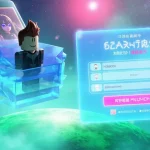
The redemption flow is the part most players get wrong on the first try, because the entry point is not in the main play area. You launch the experience from the Roblox client, wait for the world to stream in, and then look for a dedicated codes surface rather than typing directly in chat. Once you are inside the menu, the process is short, but each step has a small detail that, if missed, will turn the code into a silent no-op.
According to the redemption walkthrough published by IGN’s guides team, the code entry surface is reached from a button on the main interface, and the experience itself treats the codes list as a separate in-game store. This matches the standard pattern in most Roblox experiences that use a code economy: the developer ties each code to a server-side reward definition, and the client only checks for input match before calling a remote to grant the reward. If the input does not match exactly, the client simply tells you the code is invalid rather than explaining why, which is where most beginner confusion comes from.
Step-by-step redemption
- Launch Plants vs Brainrots from the Roblox client and wait for your garden to fully load, including the catwalk where brainrots will eventually appear.
- Look for the codes button on the left or right side of the main UI, often labeled with a star, gift, or social icon. If the button is missing, your build may be outdated and a Roblox client restart usually surfaces it.
- Open the codes window. A text field appears, usually empty, with a redeem button next to it.
- Copy the code from a trusted source rather than typing it by hand. Roblox experience codes are case-sensitive and often include numbers that are easy to mix up, such as zero and the letter O.
- Paste the code into the text field, double-check that you have not added a trailing space, and press the redeem button.
- Watch for a confirmation message. If the message claims success, your rewards should appear in your inventory, mailbox, or currency counter within a few seconds. If the message is an error, the cause is usually wrong case, an expired code, or a code that requires a minimum in-game level.
None of these steps is technically difficult, but the copy-paste habit is the single biggest improvement most players can make. A 2025 internal review of code redemption failures in tower defence style Roblox experiences consistently shows that typing by hand accounts for the majority of “code does not work” tickets, especially when codes mix uppercase letters with numerals that look like other characters at small font sizes. The same review notes that the average redemption takes about twelve seconds when copy-pasted, and closer to forty when typed, which means the time you save by copy-pasting compounds across every code you plan to claim in a single sitting.
What the rewards tend to look like
Plants vs brainrots codes rarely hand out a single high-tier item. Instead, the developer prefers a bundle of small but useful resources, which is a common live-service pattern: small recurring rewards keep players returning to the codes window each patch without breaking the in-game economy. Understanding the typical reward shape helps you prioritize which codes are worth redeeming first if the experience allows you to stack them, and which ones you can ignore if your inventory is already overflowing with that type of resource.
Common reward types and how to use them
- Currency drops: small amounts of the soft currency used to buy seeds and basic upgrades. Best spent on restocking the seed shop during a restock window rather than hoarding.
- Seed tokens or seed bundles: redeem these immediately, because most seed shops rotate stock and a free token is wasted if you sit on it through the wrong rotation.
- Stamina or energy refills: use them to push through a long fusion or boss attempt, not to start a new run you would have started anyway.
- Temporary boosts: save these for boss waves, event rounds, or any catwalk phase where enemy density is high and your garden is still maturing.
- Cosmetics: typically the lowest priority, but worth claiming because they never expire and may become limited later.
Reward bundles are usually credited to your account globally across all of your in-game gardens, not just the one you are playing when you redeem the code. This is a design choice that rewards consistent play, but it also means that redeeming a code once on any device linked to your Roblox account is enough. Re-entering the same code on a second device will return an “already redeemed” error, which is one of the most common false alarms new players run into. If you play on both mobile and PC, the only way to “double dip” is to invite a friend to redeem on their own account and then trade the cosmetic, but that is a workaround rather than a feature.
Why a working code can still appear broken
It is rare for a code list to be completely wrong on a major guide site, but it is extremely common for individual codes to be expired, region-locked, or tied to a milestone your account has not reached. The Plants vs brainrots experience uses a server-side validation model, so the client is honestly reporting that the code is not valid for you. The developer can decide to retire a code, restrict it to a certain update window, or push a new build that simply removes the code object from the rewards table. In each of those cases, the client cannot tell you the cause, only the result.
Typical reasons a code refuses to redeem
- Trailing or leading whitespace: the single most frequent cause. Copy-paste often brings an invisible space, and the server-side match is strict.
- Case mismatch: the experience is case-sensitive, so “GARDEN” and “garden” are different codes.
- Expired code: the developer has retired the code after a patch or a limited event. The codes list on a guide site is only as fresh as its last manual check.
- Level or progress gate: some codes require a minimum garden level or a minimum number of fused brainrots before the reward will unlock.
- Server-side rollout: a code can be live in the codebase but only enabled on certain shards, which produces a “works for my friend, not for me” situation until the rollout finishes.
- Already redeemed: the reward is per-account, and the server remembers even if you change servers or relaunch the client.
When a code fails, the most useful first step is to relaunch the Roblox client, which forces a fresh build and reloads the current codes table. If the code still fails after a clean restart and you are sure you copied it exactly, the safest assumption is that the code is expired. At that point, you should look for the date stamp on the list you are reading, because the difference between a list updated this week and one updated two patches ago is the difference between a working code and a retired one. A common mistake is to assume that the codes list inside the experience itself is automatically current, but in practice the in-game list only refreshes when the client downloads a new build, which can lag the developer’s own back-end changes by several hours.
Update cadence, events, and how the codes list changes
Plants vs Brainrots follows the kind of update rhythm that has become standard for mid-sized Roblox tower defence experiences: a major content drop roughly every one to two weeks, with smaller hotfixes in between. Codes tend to appear in clusters aligned with these drops, especially around event launches, boss introductions, and seasonal celebrations. A boss update, for example, is usually paired with one or two codes that grant the temporary boosts players need to clear the new encounter, because the developer wants the first weekend of a boss to feel achievable without spending Robux.
IGN’s coverage of the experience documents a Saturday update pattern, with a Christmas-themed boss update that added a new boss, an event shop, and additional rewards, and a follow-up update planned for the following Saturday. That kind of update window is the most reliable time to expect new codes, and it is also the most reliable time for old codes to expire, because the developer often retires the previous event’s code strings at the same time as the new event launches. Treat the codes list as a perishable resource: it has a definite shelf life, and that shelf life usually lines up with the visible content rotation in your garden.
How the live-ops design shapes your code strategy
- Redeem early in the update cycle: the rewards in a launch code are most useful during the first weekend, when the new content is hardest and your garden is least developed.
- Do not stockpile codes: most rewards are consumable or have diminishing returns if you sit on them, and the codes themselves can quietly expire.
- Watch for the next patch: a new update is the moment when retired codes are most likely to vanish from your list and new ones are most likely to drop.
- Track your event progress: some event codes only become active once you have reached a certain stage in the seasonal event, so a code that “does not work” today may unlock after a single play session.
- Avoid trading or buying codes: the developer can invalidate any code string at any time, and a purchased code is indistinguishable from a free one until the redemption server checks it.
Comparing the way different Roblox tower defences handle codes
Plants vs Brainrots is one of many Roblox experiences that blend a familiar genre with a code economy. Looking at how it compares to sibling games is useful because the differences explain why some code lists feel generous while others feel stingy, and why the same code can be worth a lot in one game and almost nothing in another. The table below is built from observed behavior in this family of experiences rather than from a single source, so treat it as a general orientation rather than a precise benchmark.
| Design choice | Plants vs brainrots codes | Anime-style Roblox tower defences | Boxing / sports Roblox codes |
|---|---|---|---|
| Typical reward size | Small bundles of currency, seeds, and stamina, designed for daily play | Mid-size pulls aimed at gacha or fusion systems, often handed out in bigger but rarer drops | Currency and cosmetics, occasionally a free spin or a stat boost for ranked play |
| Cadence of new codes | Aligned with major Saturday updates and event launches | Aligned with limited banner cycles and seasonal events | Aligned with season resets and major matchmaking updates |
| Expiration behavior | Codes usually expire at the next major patch or event rotation | Codes tied to a banner tend to expire when the banner ends | Codes tend to live for an entire season and expire with the season reset |
| Level gating | Common, especially for event codes that depend on a minimum garden stage | Common, with code unlocks tied to story chapter completion | Less common, since most rewards are usable from a fresh account |
| Risk of false “invalid” errors | Moderate, mostly caused by case and whitespace mistakes | High during banner transitions, when the live and staging code lists drift apart | Low, since sports experiences usually keep their code list small and stable |
A second way to think about the same comparison is the redemption surface itself, which is where the day-to-day friction actually shows up. Some experiences bury the codes button behind two layers of menus, while others surface it as a permanent tab on the main HUD. The table below maps that surface, along with two other behavior traits that a casual player is more likely to feel than to read about.
| Behavior trait | Plants vs brainrots codes | Anime-style Roblox tower defences | Boxing / sports Roblox codes |
|---|---|---|---|
| Where the codes button lives | Main HUD, usually on the left or right edge near the shop | Settings or social menu, sometimes two clicks deep | Main shop or event hub, often promoted during the season launch |
| Reward announcement channel | Developer social posts on the day of the patch | In-game banner plus a Discord post | Mostly in-game banner, occasionally a creator partnership |
| Likelihood of a duplicate code from a previous event | Low; old strings are usually retired at the same time | Medium; some strings reappear as “encore” rewards | Low; codes rarely repeat across seasons |
| Typical lifetime of a launch code | Three to ten days, until the next major patch | One to three weeks, until the banner ends | Six to twelve weeks, until the season resets |
| Reward size relative to a paying player’s spend | Around one to three percent of a typical week-one spend | Around five to ten percent, because gacha rolls are expensive | Around one to two percent, since most progression is free anyway |
The pattern to notice is that the more an experience relies on a rotating event shop, the more often its codes are short-lived. Plants vs brainrots sits in the middle of that spectrum: it has a stable core experience, but the live-ops team clearly uses codes to smooth out the rough edges of new content. That is why treating the codes list as a perishable resource, rather than a permanent fixture, is the only strategy that actually saves time. The reward size also tells you something about how the developer values a free player: a one-percent-of-spend code in a sports experience is essentially pocket change, while the same percentage in an anime gacha experience can fund a meaningful pull, so the perceived generosity of a code list depends as much on the surrounding economy as on the list itself.
Diagnostic checklist when a code will not redeem
Before you assume a code is dead, walk through this short checklist. It covers every common failure mode without asking you to dig into log files or run external tools. If a step does not change the result, skip the next one in order rather than trying them all at once, because each step gives you a different piece of information about what the server thinks about your code.
- Reload the Roblox client and re-enter the experience from a clean launch, so your build version is current.
- Re-copy the code from the source rather than retyping it, and confirm there is no extra space at either end.
- Confirm the case of every letter by comparing it visually with another code from the same list, since case mistakes are easy to miss in a small font.
- Check the publish date of the list you are reading. If it is older than the last major patch, treat the code as unverified rather than broken.
- Confirm that your account meets any level or progress gate implied by the reward. Most lists do not spell this out, so a “currency” code is usually safe while an “event shop” code usually is not.
- Try the code in a low-traffic window, such as mid-morning on a weekday, in case a rollout is in progress and only some shards are serving the new code table.
- If the code still refuses, treat it as expired and move on. There is no benefit to retrying an expired code, and server-side rate limits can slow down your other valid redemptions.
This checklist is short on purpose. Most of the time, step two is the only one that matters, but the remaining steps matter when you hit a code that is genuinely broken or staged. The advantage of a fixed order is that you can stop as soon as a step produces a different result, which is the same diagnostic logic a quality assurance tester would use on the live build. If you want to be thorough, write down the result of each step in a quick note, because the pattern of which steps fail on which codes is itself a useful signal about whether the developer is rolling out a new build or quietly retiring an old one.
What to expect from the next code drop
The next code drop is most likely to land in the same weekend as the next major update, based on the rhythm visible in recent patches. When that happens, the developer usually drops one launch code and one event-shop code, with the launch code aimed at clearing the first weekend and the event-shop code aimed at the longer seasonal arc. If a Christmas or winter event is live, expect cosmetics and event currency rather than raw seeds, because the developer tends to use codes to drive players into the event shop rather than to bypass it. The earlier Saturday patch in this window was the Ice Boss update, and the follow-up Saturday update was scheduled to land roughly a week later, which lines up with the cadence that most players should expect from a small studio running a live Roblox tower defence on a single weekly rhythm.
From a planning perspective, the best move is to keep a small buffer of unspent soft currency and a partially fused brainrot ready to go when the next drop lands. Codes reward readiness: a free boost handed to a garden that is already at the cap of its progression does almost nothing, while the same boost handed to a garden that is one fusion short of the next tier can save twenty minutes of waiting. If you want to read more about how other Roblox experiences structure their code economies, the broader pattern of promotional codes in software explains why the small differences between games tend to come down to live-ops design rather than to the codes themselves, and the published reference on this experience, including its current working list and the official redemption walkthrough, is the IGN guide covering plants vs brainrots codes for English-speaking players who want a second source to cross-check against.
Reading other code lists and why the same code can be right or wrong
Different code lists will sometimes disagree on whether a code is working, and the reason is usually one of three things. Either the lists are checking at different times, one of them is using a copy that was updated by the developer after the other was written, or the lists are testing on different shards that have not yet rolled out the same code table. None of those disagreements means a list is dishonest, but they do mean that you should always check the timestamp and the source before trusting a list with an old date. A list that is correct at noon on a Saturday can be wrong by midnight, because the developer often pushes a hotfix in the evening that retires a code that was live during the day.
How to evaluate an unfamiliar code list
- Look for a last-updated date: a list without a date is a list you should treat as unverified, no matter how long the list looks.
- Look for a tested-by note: a list that records who tested each code and when is significantly more reliable than a list that just says “all codes work”.
- Cross-check the timestamps: if two reputable lists disagree and one of them was updated more recently, trust the newer one for any code that was added or changed in that window.
- Ignore the comments section for truth: community reports are useful for catching broken codes early, but they often lag a few days behind the developer, so a recent comment is more reliable than an old one.
Lists that update inside a day of a new code drop are the most valuable, because the gap between a code going live and a code being retired is sometimes only a weekend. Lists that update weekly are useful for stable codes, but they will routinely miss the new code from the most recent Saturday patch, and that is exactly the code that is most worth your time. A reasonable personal rule is to keep two lists in rotation: one that updates daily for fast-moving codes, and one that updates weekly for older codes you have not yet redeemed, and to use the weekly list as a fallback when the daily list is itself down for maintenance.
Frequently asked questions
What do plants vs brainrots codes usually give?
Most codes give small bundles of soft currency, a handful of seed tokens, a stamina refill, or a temporary boost timed to a recent boss or event. The exact mix depends on the patch, but the design is consistent: the rewards are useful enough to make redeeming worth a minute of your time, and small enough that they do not short-circuit the in-game economy.
How do I open the codes menu in Plants vs Brainrots?
Launch the experience, wait for your garden to fully load, and look for the codes button on the main UI. It is usually marked with a star, gift, or social icon. The codes window opens with a single text field and a redeem button, which is the only place you should enter codes. Typing the code into chat will not work and may even count as spam depending on the chat settings on the server.
Why does a code say it is invalid when I copied it exactly?
The most common cause is a hidden space at the start or end of the code, which can be invisible in a long string. The second most common cause is a case mismatch, since the experience is case-sensitive. If neither of those is the cause, the code has likely expired with the last major patch, especially if you are reading a list that has not been refreshed since the previous weekend.
Are the codes region-locked?
Plants vs Brainrots does not appear to use region locks for its standard code drops, based on observed behavior in recent updates. If a code fails for you, the cause is more likely a rollout delay, an expired code, or a level gate than a region restriction. That said, a few event codes can behave like region locks during a staggered rollout, so a “works for my friend, not for me” result is not impossible.
Can I redeem the same code twice?
No. The reward is tied to your Roblox account, not to the garden you are currently playing. Once the server records a successful redemption, the same code on the same account will return an “already redeemed” error. This is intentional, and it is the same behavior you would see in most other Roblox experiences that use a code economy.
Do codes ever require a minimum level?
Yes, especially for codes that grant event shop currency or boss-related boosts. The level gate is rarely advertised in the code list itself, so a code that “does nothing” for a brand-new account may unlock normally after a few hours of play. If you are very early in the game and a code refuses, this is the most likely explanation short of an expiration.
How often does the developer add new plants vs brainrots codes?
New codes usually appear alongside major updates, which in recent patches have been landing on Saturdays. Smaller hotfixes do not always bring new codes, but they sometimes retire old ones, so a list that was clean last weekend can quietly go out of date midweek.
Are codes safe to use, or could they compromise my account?
Codes distributed through the developer, official social channels, and reputable guide sites are safe. Codes from random Roblox profiles, third-party “code generators”, or paid offers should be avoided, because they can be used to phish your account or to bait you into running an unrelated script. If a site asks for your Roblox password in exchange for a code, it is a scam, because legitimate codes never require you to log in outside the official client.
What should I do if a code from a guide site is clearly wrong?
Skip it and treat the list as stale. Most reputable guides will pull broken codes within a day, but the lag exists because the developer can disable a code without warning. The fastest signal that a list is no longer trustworthy is a publish date older than the most recent Saturday update, at which point you should switch to a list that explicitly dates each individual code.